
1. Limitations of capillary electroporation
 The wall of the capillary is an insulator. When a cell is very close to the capillary wall, a narrow passage between the cell and the capillary wall is formed for the electric current to pass through. This narrow passage is allocated a higher voltage because liquid resistance is inversely proportional to the cross-sectional area. The effective electroporation surface on the cell is also increased. The capillary effect (CE) can be similarly achieved in a non-capillary solution by placing cells at a high concentration allowing them to be each other’s next insulator.
 The capillary effect is very sensitive to the distance between the cell and the capillary wall. When a cell is very close to the capillary wall (
  ), capillary effect (CE) is very strong and this cell would need a lower pulse voltage. As the cell-to-wall distance increases (
  ), capillary effect quickly weakens and this cell would need a higher pulse voltage. When the cell is placed about two cell diameters’ distance from the capillary wall (
  ), there is almost zero capillary effect and this cell would require an even higher voltage.Since all cells in a capillary experience the same voltage pulse from a pulse generator, it is not possible for the pulse to be equally suitable for all three areas of cells. Therefore the capillary mechanism is inherently limited.
/Parameters of comparison/ | 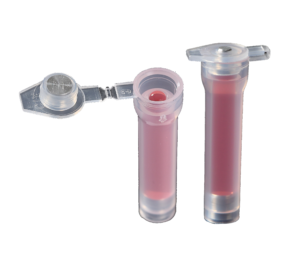 Celetrix™ Electroporation tube |  Cuvette | |
Sample volume | 20ul-10ml | 100ul~800ul or 20ul~100ul | 10ul~100ul |
Bubble compression | Yes | No | No |
Field uniformity | High | Lowest | Lower |
Cytotoxicity | Low | High | Medium |
Precision | High | Low | Medium |