
Jurkat cells are hard to transfect with lipid reagents. With Celetrix electroporation, Jurkat cells reach >90% transfection efficiency and keep growing fast afterwards. Below are our protocol and recommended parameters.

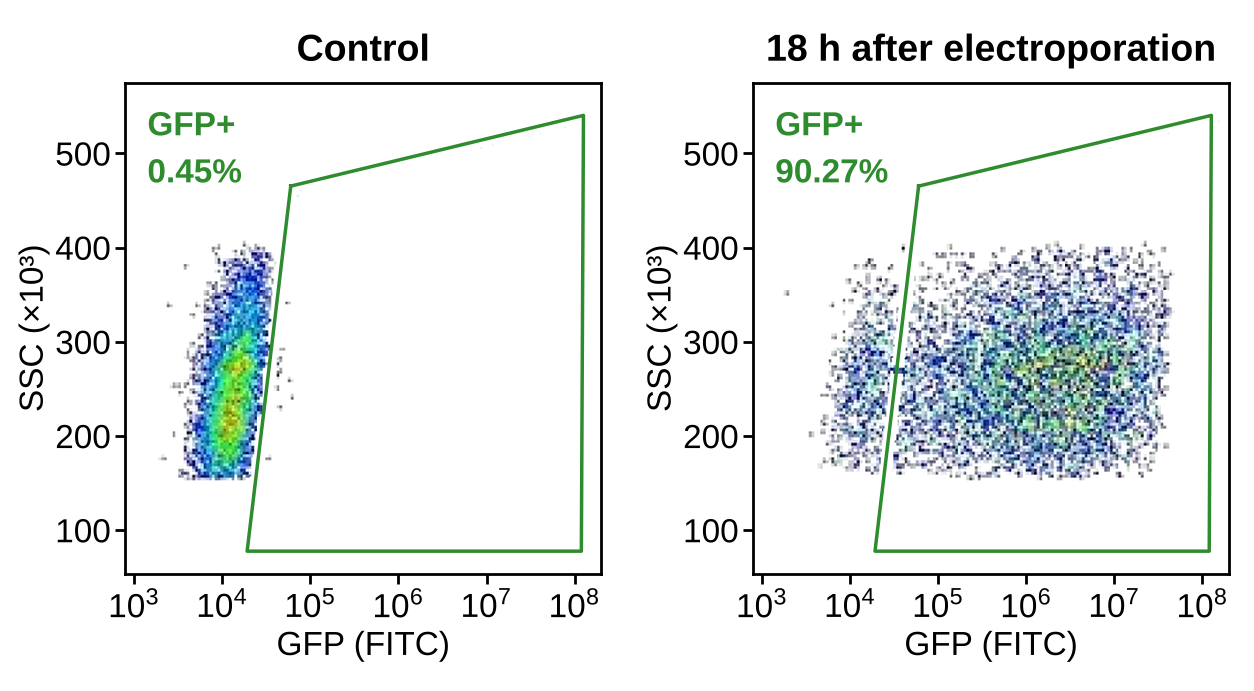
| 20 µl tube | 1–2×10⁶ cells, 2 µg plasmid, Cell Line mode 500–540 V |
| 100 µl tube | 5–10×106 cells, 10 µg plasmid, Cell Line mode 500–540 V |
| 200 µl / 1 ml tube | Cell Line mode 1200–1350 V |
| Buffer | Celetrix electroporation buffer |
| Recovery medium | RPMI 1640 + 10% FBS, antibiotic-free |
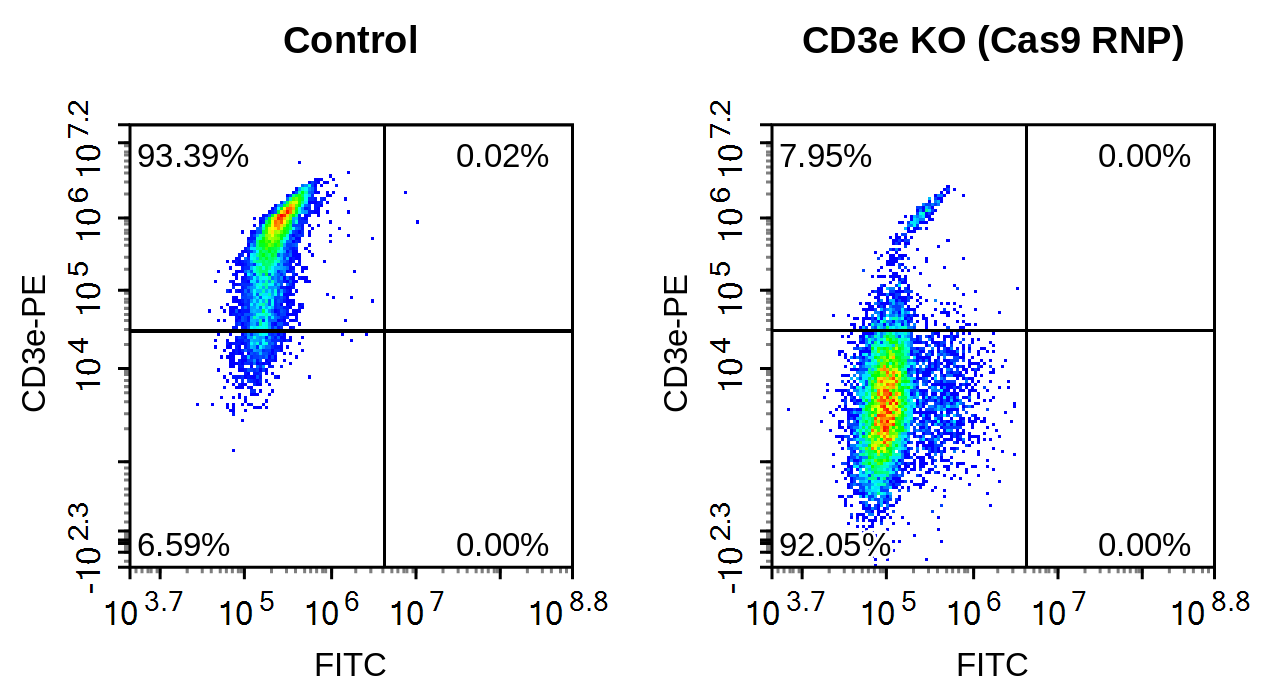
For a 20 µl Celetrix tube:
| Cells | 1–2×10⁶ cells, pelleted |
| Cas9 protein | 5 µg |
| sgRNA | 50–100 pmol (for multiple sgRNAs, add Cas9 protein last) |
| RNP assembly | Mix Cas9 and sgRNA in 22 µl Celetrix electroporation buffer; incubate 10 min at room temperature |
| Electroporation | Add the RNP mix to the cell pellet, mix well and electroporate (about 25 µl total) |
Tips for Jurkat
Electroporation acts at the cell membrane, so its small toxicity stays at the membrane and has little effect inside the cell. Lipid and other chemical transfection reagents affect not only the membrane but also components inside the cell. That is why Celetrix electroporation keeps cell toxicity low and Jurkat cells healthier than transfection reagents. Learn how the voltage falls on the cell membrane in our electroporation mechanism page.
On Celetrix electroporators, use Cell Line mode at 500–540 V for 20 µl and 100 µl tubes, and 1200–1350 V for 200 µl and 1 ml tubes. See all Celetrix recommended parameters.
The best voltage depends on your sample. Higher cell density needs a slightly higher voltage. With larger plasmids, cells tolerate high voltage less well, so lower the voltage slightly. That is why Celetrix gives a voltage range instead of one fixed voltage: choose a value within the range to match your cell density and plasmid size.
For Celetrix electroporation, use 1–2×10⁶ Jurkat cells per 20 µl tube or 5–10×106 cells per 100 µl tube.
Yes. Celetrix recommends Cas9 RNP for Jurkat gene editing: 5 µg Cas9 protein with 50–100 pmol sgRNA per 20 µl tube. RNP avoids the toxicity of Cas9 plasmids.
Move cells into warm, antibiotic-free RPMI 1640 + 10% FBS right after the pulse. With Celetrix electroporation, about 10–20% cell death is normal; if there is a lot of cell death, lower the voltage by 20–30 V.