
Transfect human iPSCs at >80% efficiency with >85% survival, with no feeder cells needed. Peer-reviewed studies show precise CRISPR editing of iPSC disease models with Celetrix.
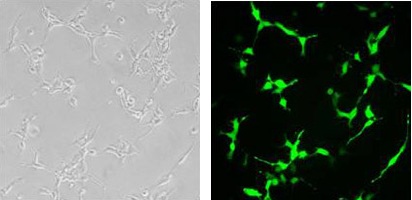
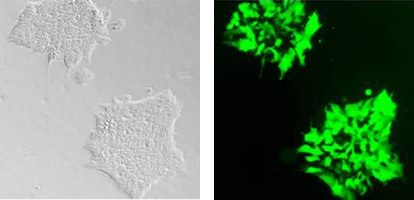
Feeder cells are not required during electroporation. After 3 days, cells grow into compact colonies typical of undifferentiated iPSCs.
Researchers at Johns Hopkins University School of Medicine used Celetrix electroporation to create precisely edited iPSC disease models.
Scientific Reports, 2021
Li PP, Margolis RL. Sci Rep 11:9865.
CRISPR knock-in of an expanded CAG repeat (SCA12 disease model) in human iPSCs electroporated with Celetrix. About 15% of selected clones were precisely edited, with no on-target indels or off-target changes.
Stem Cell Research, 2021
Feng H, Li Q, Margolis RL, Li PP. Stem Cell Res 53:102346.
A homozygous SCA12 iPSC line (69 and 72 CAG repeats) generated with Celetrix electroporation. The line kept a normal karyotype, expressed pluripotency markers (Oct4, Sox2, Nanog) and differentiated into all three germ layers.
For a 20 µl Celetrix tube:
| Cells | 1–2×10⁶ cells, pelleted |
| Cas9 protein | 5 µg |
| sgRNA | 50–100 pmol (for multiple sgRNAs, add Cas9 protein last) |
| RNP assembly | Mix Cas9 and sgRNA in 22 µl Celetrix electroporation buffer; incubate 10 min at room temperature |
| Electroporation | Add the RNP mix to the cell pellet, mix well and electroporate with the recommended human iPSC parameters (about 25 µl total) |
Why RNP instead of Cas9 plasmid?
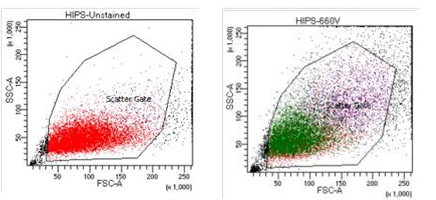
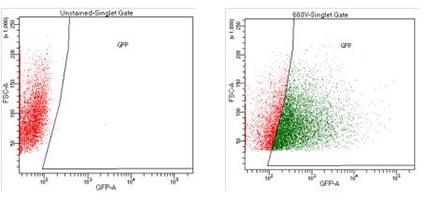
Electroporation is the most efficient way to transfect human iPSCs, which are hard to transfect with lipid reagents. With Celetrix electroporation, human iPSCs reach >80% GFP-positive cells with >85% survival, and no feeder cells are needed.
Dissociate iPSCs into single cells, electroporate promptly, move cells into warm medium right after the pulse, and add RevitaCell or a ROCK inhibitor to the recovery medium. Recover cells in antibiotic-free medium, then switch to regular medium with antibiotics at the first passage. With these steps, Celetrix electroporation keeps >85% of iPSCs alive.
Yes. After Celetrix electroporation, iPSCs grow into undifferentiated colonies by 72 h. An iPSC line edited with Celetrix (Feng et al., Stem Cell Res 2021) kept a normal karyotype, expressed Oct4, Sox2 and Nanog, and differentiated into all three germ layers.
Pre-assemble 5 µg Cas9 protein with 50–100 pmol sgRNA in 22 µl Celetrix electroporation buffer for 10 min at room temperature. Add the RNP to 1–2 million pelleted cells, mix and electroporate in a 20 µl Celetrix tube.
Yes. Researchers co-delivered Cas9 nickase/sgRNA, donor and BCL-XL plasmids into human iPSCs in a single Celetrix electroporation and obtained precisely edited clones without on-target indels (Scientific Reports 2021; Stem Cell Research 2021).
A 20 µl Celetrix tube electroporates 1–2 million cells, and a 100 µl tube 5–10 million cells. See Recommended Parameters for settings.